

Last updated: October 31, 2026 • Medically & scientifically referenced • Peer-reviewed sources
Pediatric Cough & Respiratory Health Disclaimer
Strict Warning: Never administer honey to children under 12 months of age due to the risk of infant botulism. While clinical trials from Penn State and the AAP cite honey as a demulcent for nocturnal coughs in children over 1 year, honey is not a substitute for medical evaluation. If a cough is accompanied by high fever, stridor, wheezing, shortness of breath, or lasts longer than 7 to 10 days, seek immediate professional medical care. Review our full Medical & Veterinary Disclaimer.
The 30-Second Bottom Line
Buckwheat honey is a rich, dark, molasses-colored honey produced by bees foraging on the blossoms of common buckwheat (Fagopyrum esculentum). It contains up to 7 times the antioxidant and polyphenol concentration of light honeys like clover or acacia.
Proven Clinical Cough Relief: In a landmark pediatric clinical trial at Penn State College of Medicine, a single bedtime dose of buckwheat honey significantly outperformed dextromethorphan (DM)—the primary active ingredient in over-the-counter cough syrups—and placebo in reducing nocturnal cough frequency, lessening cough severity, and improving sleep quality for both children and parents.
Flavor & Dietary Profile: Intensely robust, malty, and earthy, resembling dark sorghum molasses. Despite the word “wheat” in its name, buckwheat is a 100% gluten-free pseudocereal related to rhubarb, making pure buckwheat honey naturally safe for celiacs. Never give to infants under 12 months.
If light clover or acacia honey is a gentle summer acoustic ballad, buckwheat honey is heavy Scandinavian metal.
The moment you twist the lid off a jar of raw buckwheat honey, you realize you are dealing with a completely different beast. It is practically pitch black—a deep, opaque, reddish-mahogany syrup that pours with the dense gravity of blackstrap molasses. Its aroma is unapologetically earthy, pungent, and malty, with subtle barnyard and caramelized malt undertones.
To the uninitiated supermarket shopper accustomed to squeezy plastic bears of clear golden syrup, buckwheat honey can be startling. Some love its bold, complex umami profile; others find it intensely medicinal.
But in clinical pharmacology and natural medicine, buckwheat honey is considered the undisputed king of domestic honeys. Long before pharmaceutical conglomerates marketed synthetic antitussives with laundry lists of warnings, pediatricians and apiarists turned to this dark botanical elixir to quiet relentless nighttime coughs.
In this master guide, we will unpack the medical research behind the landmark Penn State cough trials, examine why dark pigments equal therapeutic power, compare buckwheat against medical Manuka honey, debunk the “wheat” gluten myth, and provide our clinical bedtime dosing protocol.
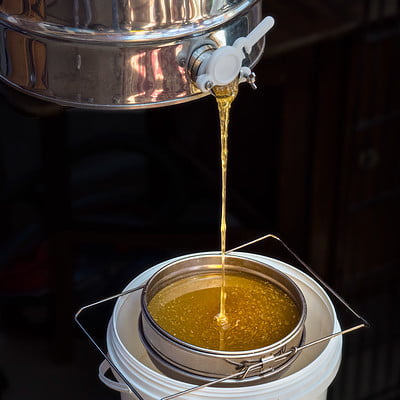
Published apicultural biochemistry and clinical pediatric research establish the exceptional therapeutic profile of monofloral buckwheat honey (Fagopyrum esculentum):
- ORAC & Polyphenolic Density (Gheldof & Engeseth, 2002): In comparative spectrophotometric assays across floral varieties, raw buckwheat honey demonstrated the highest Oxygen Radical Absorbance Capacity (ORAC) and total phenolic content among all commercial honeys tested, exceeding light clover and acacia honeys by up to 7 to 10 times.
- Pediatric Cough Clinical Trial (Paul et al., 2007): In a trial of 105 children at Penn State College of Medicine, a single bedtime dose of raw buckwheat honey proved significantly superior to dextromethorphan (DM) and no treatment in reducing nocturnal cough frequency, cough severity, and child-parent sleep disruption.
- High Molecular Weight Melanoidins: The characteristic dark molasses color and potent radical-scavenging activity of buckwheat honey stem from high concentrations of dietary polyphenols, rutin, and natural floral melanoidins, which also provide dense mucosal demulcent coating properties.
1. The Clinical Showdown: Buckwheat Honey vs. Dextromethorphan (DM)
Every parent dreads the nighttime pediatric cough. Children cough until they vomit, parents lose sleep, and over-the-counter cough syrups (often loaded with dextromethorphan, codeine, or diphenhydramine) carry stern FDA warnings against pediatric use due to risks of respiratory depression, dizziness, and behavioral toxicity.
In 2007, a research team led by Dr. Ian M. Paul at the Penn State College of Medicine conducted a definitive, randomized, partially double-blind clinical trial published in the Archives of Pediatrics and Adolescent Medicine.
🩺 The Penn State Clinical Protocol (105 Pediatric Patients)
The trial evaluated 105 children aged 2 to 18 years suffering from upper respiratory tract infections and nocturnal cough. Patients were divided into three intervention groups administered 30 minutes before bedtime:
- Group A: Artificially honey-flavored Dextromethorphan (DM) syrup.
- Group B: A single age-tiered dose of pure raw Buckwheat Honey.
- Group C: No treatment (Control).
The Results: Buckwheat honey achieved the highest scores across all metrics—significantly superior to both DM and no treatment in reducing cough frequency, reducing cough bothersomeness, and dramatically improving child and parental sleep quality.
Why Does Honey Beat Pharmaceutical Cough Syrups?
Dextromethorphan works centrally in the brain’s medulla oblongata, trying to suppress the neurological cough reflex. But nighttime coughs caused by respiratory infections are triggered by peripheral mechanical irritation in the pharynx: inflamed, dry, raw mucous membranes irritated by post-nasal drip.
Buckwheat honey attacks the root physical problem through dual kinetics:
- The Physical Demulcent Coat: Buckwheat honey’s extraordinarily thick viscosity blankets hyper-sensitized sensory nerve endings in the throat, creating a soothing physical barrier that prevents dry air and post-nasal mucus from triggering spasms.
- Antioxidant & Antimicrobial Bath: While coating the pharynx, honey slowly releases low-level enzymatic hydrogen peroxide and antioxidant polyphenols, reducing local inflammation and inhibiting viral-bacterial colonization.
2. The Antioxidant Powerhouse: Why Dark Honey Dominates Light Honey
In food biochemistry, there is an established universal rule: the darker the natural food, the higher its antioxidant capacity (think blackberries vs. white grapes, or dark chocolate vs. milk chocolate). Honey obeys the exact same law.
Buckwheat honey’s near-black appearance is caused by high concentrations of p-coumaric acid, ferulic acid, caffeic acid, and rutin. It is also exceptionally dense in bioavailable trace minerals, particularly iron, manganese, zinc, and magnesium, which the buckwheat plant’s deep taproots draw up from subsoil strata.
3. The Clinical Bedtime Cough Protocol (Children 1+ and Adults)
To duplicate the clinical efficacy achieved in medical trials, follow this precise bedtime protocol:
Toddlers (Ages 1 to 5)
½ Teaspoon (2.5 ml)
Administer 30 minutes before bedtime. Allow child to swallow slowly off a spoon. Do not give water immediately after.
Children (Ages 6 to 11)
1 Teaspoon (5 ml)
Administer 30 minutes before sleep. Can be repeated once during middle-of-the-night coughing awakenings.
Teens & Adults (12+)
2 Teaspoons to 1 Tbsp
Take straight off the spoon. Alternatively, pair with our bee propolis tincture protocol for stubborn bronchitis.
⚠️ THE NON-NEGOTIABLE AGE RULE:
Never give buckwheat honey (or any honey of any variety) to infants under 12 months of age. As detailed in our comprehensive guide to infant botulism risks, an infant’s immature gastrointestinal microbiome cannot neutralize dormant Clostridium botulinum endospores.
4. Buckwheat Honey vs. Manuka Honey: Which Should You Buy?
Consumers looking for maximum medicinal power frequently ask: “Should I spend $60 on a jar of New Zealand Manuka honey, or $15 on local raw Buckwheat honey?”
The Verdict: For respiratory tract infections, cold-and-flu season, and nighttime pediatric coughs, raw buckwheat honey is the clinical winner—providing equal or superior demulcent cough suppression at a fraction of the cost. For severe external wound healing, burns, or diabetic ulcers, high-UMF Manuka honey retains the advantage.
5. The Myth-Buster Vault: What the Internet Gets Wrong
Myth 1: “Buckwheat honey contains gluten because it’s called ‘wheat’.”
The Reality: Buckwheat is not wheat; it is not even a grass. Buckwheat (Fagopyrum esculentum) is a flowering broadleaf plant belonging to the Polygonaceae family, making it a close botanical cousin of rhubarb and sorrel. It produces seeds rather than true cereal grains. Buckwheat is 100% naturally gluten-free, and authentic pure buckwheat honey is completely safe for individuals with celiac disease or gluten sensitivity.
Myth 2: “Its dark color means the honey was burned or overheated.”
The Reality: Pure raw buckwheat honey is harvested from the comb as an intrinsically dark, reddish-black liquid straight from the hive. Its darkness is driven by natural polyphenols and mineral pigments, not heat damage. In fact, heating buckwheat honey would denature its living invertase enzymes and destroy its delicate volatile flavonoids.
Myth 3: “All dark honeys are buckwheat honey.”
The Reality: Several honeys exhibit dark coloration, including chestnut honey, avocado blossom honey, heather honey, and honeydew (forest) honey. Each has distinct sensory and botanical properties. True buckwheat honey is distinguished by its characteristic malty, molasses aroma and rapid crystallization into a thick, fine-grained paste.

From the Apiary of Barnaby Thorne
Editorial Pen Name & Apiculture Team at bee-honey.org
“When I introduce visitors to buckwheat honey for the first time, their reactions are always priceless. Some expect sweet clover and flinch; others take one spoonful and declare they will never buy supermarket golden syrup again. Keep a jar in your medicine cabinet all winter—when a nocturnal coughing spasm strikes, nothing on Earth works faster.”
Sources & Scientific References
- Paul, I. M., et al. (2007). Effect of honey, dextromethorphan, and no treatment on nocturnal cough and sleep quality for coughing children and their parents. Archives of Pediatrics & Adolescent Medicine, 161(12), 1140–1146.
- Gheldof, N., Wang, X. H., & Engeseth, N. J. (2002). Identification and quantification of antioxidant components of honeys from various floral sources. Journal of Agricultural and Food Chemistry, 50(21), 5870–5877.
- Gheldof, N., & Engeseth, N. J. (2002). Antioxidant capacity of honeys from various floral sources based on the determination of oxygen radical absorbance capacity (ORAC). Journal of Agricultural and Food Chemistry, 50(10), 3050–3055.
- Brudzynski, K., & Miotk, D. (2011). The recognition of high molecular weight melanoidins as the main components responsible for radical-scavenging activity of unheated and heated honeys. Food Chemistry, 125(3), 1070–1075.
- Codex Alimentarius Commission (CXS 12-1981, Revised 2001, Amended 2019). Standard for Honey. FAO/WHO.
[…] Buckwheat Honey […]
[…] trial of 105 children with upper respiratory tract infections, a single pre-bedtime dose of dark buckwheat honey scored significantly superior to dextromethorphan in reducing cough frequency and symptom […]
[…] Once your child celebrates their first birthday, you can safely introduce delicious, nutritious raw honey into their diet—starting with small amounts drizzled over oatmeal or fruit (including clinically validated remedies like buckwheat honey for nighttime pediatric coughs). […]
[…] an over-the-counter chemical syrup. A half-teaspoon of dark raw honey (such as antioxidant-rich buckwheat honey) licked right off the spoon stops the dry spasms within minutes. Just remember: measure by weight, […]
[…] Conversely, Acacia honey is celebrated in European pediatric and clinical herbalism for its gentle gastrointestinal tolerance. Because it does not cause rapid osmotic cramping or abrupt blood glucose spikes, it is frequently used to soothe mild gastritis, calm nocturnal coughs in children over 12 months, and sweeten herbal teas without overpowering delicate herbal compounds. For severe bronchial coughs, however, our clinical dark honey choice remains buckwheat honey. […]
[…] the pungent, medicinal bite of Manuka honey or the aggressive molasses-barnyard notes of dark Buckwheat honey, Acacia honey possesses the most discreet, polite flavor profile in the […]