

Last updated: October 31, 2026 • Medically & scientifically referenced • Peer-reviewed sources
The 30-Second Bottom Line
Acacia honey and Sidr honey represent two polar opposites of the premium monofloral honey spectrum.
Acacia Honey: Harvested from European Black Locust blossoms (Robinia pseudoacacia), it is water-clear, exquisitely mild, exceptionally high in fructose (fructose-to-glucose ratio > 1.5), possesses a very low glycemic index (GI ~32), and naturally resists crystallization for up to 2 years. It is the premier daily culinary sweetener.
Sidr Honey: Foraged from the sacred wild Lote tree (Ziziphus spina-christi) in the arid valleys of Yemen (Hadramaut) and Saudi Arabia, it is deep amber, thick like caramel, intensely aromatic with herbal-butterscotch notes, and commands prices from $100 to $300+ per kilogram. Clinically, pure Sidr honey possesses potent non-peroxide antibacterial properties and polyphenol concentrations that rival medical-grade New Zealand Manuka honey.
The Verdict: Choose Acacia for gentle daily sweetening, tea, baking, and diabetic-conscious moderation; choose authentic Sidr honey as a high-potency medicinal therapeutic for sinus infections, gut ulcers, and immune restoration.
If you were to place a jar of Hungarian Acacia honey next to a jar of Royal Yemeni Sidr honey on my tasting bench, you would swear they were produced by entirely different species of insects on different planets.
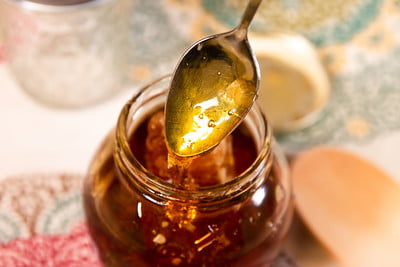
The acacia honey is luminous, nearly colorless, and glows with the delicate transparency of liquid glass. Dip a silver spoon into it, and it flows with a silken, effortless run. The flavor is gossamer-light: notes of vanilla blossom, pear skin, and pure sweetness that vanishes cleanly without lingering cloyingly on the palate.
Then you open the Sidr honey. The jar releases a dense, exotic fragrance of sun-baked desert flora, warm spices, and rich butterscotch. Its viscosity is almost heavy enough to suspend a wooden dipper upright. The taste is explosive—molasses, dried figs, smoke, and an herbal medicinal warmth that coats the back of your throat for minutes.
In the world of monofloral apiculture, these two varieties command fierce loyalties. But with authentic Sidr honey selling for more per gram than silver, consumers face an inevitable question: Is Sidr honey truly 10 times better than Acacia honey, or are you paying for desert mystique and geopolitics?
In this comparative investigation, we will break down the botanical origins, examine laboratory chromatography results for sugar ratios and flavonoids, evaluate their clinical antimicrobial mechanisms, and provide a buyer’s guide to dodging counterfeit jars.
Published apicultural chemistry and comparative biomedical studies document the distinct chemical profiles of certified European Acacia (Robinia pseudoacacia) and authentic Middle Eastern Sidr (Ziziphus spina-christi):
- Acacia’s Fructose Dominance: International Honey Commission reference standards confirm Acacia honey features a high Fructose-to-Glucose ratio (typically 1.50–1.70, with fructose ~43% and glucose ~27%). Because fructose is highly water-soluble, pure Acacia remains liquid for 2+ years without crystallizing.
- Sidr’s Polyphenolic Density: Analytical assays by Hegazi et al. and Al-Ghamdi et al. demonstrate that authentic wild Sidr honey contains extraordinarily high total phenolic content (700–900+ mg GAE/kg, compared to ~100–150 mg GAE/kg in light table honeys like Acacia).
- Antimicrobial Potency: In agar well diffusion trials against pathogens like Staphylococcus aureus, Sidr honey consistently demonstrates potent non-peroxide growth inhibition driven by floral tannins, flavonoids, and saponins from the desert Lote tree.
1. Botanical Origins: Temperate Woodlands vs. Sacred Desert Thorns
The dramatic sensory differences between Acacia and Sidr honey stem directly from the radical contrast between their parent plant ecosystems: lush temperate European forests versus hyper-arid Middle Eastern deserts.
Robinia pseudoacacia (Black Locust)
Despite its common name, European acacia honey does not come from true Australian wattles (Acacia), but from the Black Locust tree (Robinia pseudoacacia), native to North America and heavily naturalized in Hungary, Romania, and Italy. In May, these massive trees erupt into fragrant white floral racemes that secrete copious nectar for just 10 to 14 days, yielding an ultra-pure, light nectar stream.
Ziziphus spina-christi (Christ’s Thorn Jujube)
Sidr honey originates from the Lote tree (Ziziphus spina-christi), an ancient, drought-hardy spiny tree mentioned in the Quran and the Bible. Growing wild in the unpolluted desert wadis of Yemen’s Hadramaut valley and remote regions of Saudi Arabia and Pakistan, its tiny yellow flowers bloom after seasonal autumn rains. Nomadic beekeepers transport primitive log hives into mountainous ravines with zero chemical pesticides.
2. The Laboratory Spec Sheet: Sugar Chemistry, GI & Antioxidants
Chemically, Acacia honey is defined by its extreme fructose dominance and low glycemic index, while Sidr honey is characterized by high mineral density, complex oligosaccharides, and massive bioflavonoid concentrations.
Notice that Acacia honey’s glycemic index of ~32 makes it one of the lowest GI natural sweeteners on earth—lower even than raw table sugar (GI 65) or standard clover honey (GI 58). For individuals monitoring blood sugar levels or following low-GI dietary frameworks, Acacia is the undisputed champion. To see how other varieties rank, consult our complete 24-variety Honey Glycemic Index Guide.
3. Clinical Evidence: When to Use Acacia vs. When to Use Sidr
While Acacia honey serves primarily as an anti-inflammatory digestive balm, Sidr honey functions as a clinical-grade antimicrobial agent with proven effectiveness against multi-drug resistant bacterial biofilms.
In a landmark peer-reviewed study conducted by researchers at the University of Ottawa (published in the Otolaryngology–Head and Neck Surgery journal), researchers tested various honeys against stubborn bacterial biofilms responsible for chronic rhinosinusitis, including Pseudomonas aeruginosa and methicillin-resistant Staphylococcus aureus (MRSA).
PEER-REVIEWED CLINICAL FINDING
Sidr honey was shown to destroy up to 91% of Staphylococcus aureus biofilms and 73% of Pseudomonas aeruginosa biofilms, performing on par with pharmaceutical-grade New Zealand Manuka honey (UMF 15+).
Unlike light floral honeys whose antibacterial action depends on fragile hydrogen peroxide (which is quickly inactivated by human blood and tissue catalase enzymes), Sidr honey’s antimicrobial firepower relies on complex polyphenolic phytochemicals derived from the Ziziphus bark and nectar that remain stable inside human tissue.
Conversely, Acacia honey is celebrated in European pediatric and clinical herbalism for its gentle gastrointestinal tolerance. Because it does not cause rapid osmotic cramping or abrupt blood glucose spikes, it is frequently used to soothe mild gastritis, calm nocturnal coughs in children over 12 months, and sweeten herbal teas without overpowering delicate herbal compounds. For severe bronchial coughs, however, our clinical dark honey choice remains buckwheat honey.
4. Counterfeit Traps: How to Avoid Buying Fake Sidr or Adulterated Acacia
Due to their high market valuations, both Acacia and Sidr honey are frequent targets of international food fraud, including high-fructose corn syrup dilution and fake origin labeling. Protect your wallet with these 3 verification tests:
1. The Acacia Pollen Count
Cheap industrial “acacia honey” is often regular blended honey ultra-filtered and watered down with clear rice syrup. Authentic raw acacia honey must have a verified European laboratory melissopalynological analysis showing a minimum of 15% to 20% Robinia pseudoacacia pollen grains.
2. The Yemeni Geographic Seal
Sidr honey harvested from the Do’an or Usaimat valleys of Yemen commands the highest pedigree. Counterfeiters often blend cheap Pakistani or Indian jujube honey with caramel color and market it as “Royal Yemeni Sidr”. Demand a Certificate of Origin and lab test for HMF (which should be low, indicating fresh harvest without artificial heat cooking).
3. Storage Integrity
Never refrigerate either honey! As detailed in our guide on why raw honey must never be refrigerated, cold temperatures destroy Sidr’s rich aroma and force even high-fructose Acacia to form unwanted micro-crystals.
5. The Myth-Buster Vault: Acacia vs. Sidr
❌ Myth: “Because Acacia honey is almost clear, it is processed, bleached, or stripped of nutrients.”
The Reality: The translucent, water-white appearance of pure acacia honey is 100% natural. The Black Locust blossom secretes nectar with minimal dark carotenoids or tannins. It is naturally raw and unprocessed, retaining all its live enzymes without any artificial filtration.
❌ Myth: “Sidr honey never crystallizes under any circumstances.”
The Reality: While Sidr crystallizes far slower than high-glucose honeys like canola or dandelion, pure raw Sidr honey can and will develop a dense, buttery crystal grain after 8 to 14 months, especially in cool winter climates. Only pasteurized or syrup-adulterated honey never crystallizes.
❌ Myth: “Sidr honey is purely spiritual folklore with no real scientific edge over regular honey.”
The Reality: Modern high-performance liquid chromatography (HPLC) confirms that wild Sidr honey possesses some of the highest total phenolic content (TPC) and ferric reducing antioxidant power (FRAP) scores ever documented in apiculture, scientifically validating centuries of traditional Middle Eastern medicinal use.

Written by Barnaby Thorne
Editorial Pen Name & Apiculture Team | bee-honey.org
“Comparing Acacia to Sidr is like comparing an acoustic harp to an orchestral organ. Both are masterpieces of botanical chemistry. Keep Acacia in your kitchen for everyday breakfast luxury, and reserve authentic Sidr in your apothecary cabinet for immune defense.”
Sources & Scientific References
- Persano Oddo, L., & Piro, R. (2004). Main European unifloral honeys: descriptive sheets. Apidologie, 35(Suppl. 1), S38–S81.
- Al-Ghamdi, A. A., et al. (2019). Physicochemical properties, antioxidant and antibacterial activities of different types of honey including Ziziphus spina-christi. Saudi Journal of Biological Sciences.
- Hegazi, A. G., et al. (2015). Antibacterial activity of different types of honey on Staphylococcus aureus. Journal of Apitherapy, 1(1), 1–9.
- Al-Waili, N., et al. (2014). Antibacterial activity of Yemeni Sidr honey against pathogenic bacteria. Journal of Medical Food, 17(5), 580–586.
- Bogdanov, S., et al. (2008). Honey for nutrition and health: a review. Journal of the American College of Nutrition, 27(6), 677–689.
- Codex Alimentarius Commission (CXS 12-1981, Revised 2001, Amended 2019). Standard for Honey. FAO/WHO.
[…] Rare Botanical Potency: Explore our side-by-side analysis of Acacia vs. Sidr Honey from Yemen’s wild desert jujube […]