

Last updated: October 31, 2026 • Medically & scientifically referenced • Peer-reviewed sources
Urgent Pediatric & Medical Emergency Disclaimer
This article is for educational and scientific reference only and does not provide individual pediatric or medical advice. Never feed honey in any form to babies under 12 months due to the threat of infant botulism. If you suspect an infant has consumed honey or exhibits warning signs (weak cry, constipation, poor feeding, floppy muscles), seek immediate emergency medical care or call 911 / Poison Control immediately. Review our full Medical & Veterinary Disclaimer.
The 30-Second Bottom Line
What Pediatric Medicine Shows: Clostridium botulinum Biology & Spore Persistence
Published pediatric epidemiology from the CDC, the American Academy of Pediatrics (AAP), and the California Infant Botulism Program (Arnon et al.) establishes why honey must never be fed to infants under 12 months:
- Spore Prevalence in Honey (5% to 15%): Microbiological surveys published by the FDA, CDC, and international health agencies detect dormant Clostridium botulinum endospores in roughly 5% to 15% of retail honey samples. Because bees forage on outdoor flowers, soil, and dust, spores naturally enter the hive regardless of whether honey is raw, processed, or certified organic.
- Extreme Thermal Resistance of Endospores: Bacterial endospores possess thick keratin-like protein coats and dipicolinic acid that resist boiling (100°C / 212°F). Neutralizing spores requires industrial wet heat under pressure (autoclaving at 121°C / 250°F for at least 3 minutes). Standard home baking and cooking (where internal food temperatures stay below 100°C) fail to kill spores; honey in baked bread or graham crackers remains hazardous to babies.
- Why Adults and Toddlers Are Immune: In individuals older than 12 months, established diverse gut microbiota (including mature Bifidobacterium and Bacteroides species) and robust hydrochloric gastric acid (pH 1.5–2.0) competitively inhibit spore germination. In infants under 1 year, immature gut ecology and lower gastric acidity allow ingested spores to germinate in the colon and release paralyzing botulinum neurotoxin.
Babies under 12 months must never consume honey in any form—including raw, pasteurized, cooked, or baked goods. Honey can harbor dormant Clostridium botulinum endospores. Unlike older children and adults whose acidic stomachs (pH < 2.0) and established gut microbiomes destroy these spores, an infant’s immature digestive system (pH > 4.5) allows spores to germinate into vegetative bacteria that produce deadly botulinum neurotoxin.
Baking does NOT make honey safe: C. botulinum spores survive standard oven temperatures (350°F / 175°C) and require commercial pressure sterilization at 250°F (121°C) at 15 psi for at least 3 minutes to be eradicated. Honey graham crackers, honey-sweetened cereals, and baked glazes are strictly unsafe for infants under 1 year of age.
As an apiarist who spends his life praising the miraculous benefits of bees, there is one warning I deliver with absolute, zero-compromise firmness: keep honey away from babies under one year old.
Every month, pediatric emergency rooms receive calls from terrified parents: “My mother-in-law dipped my 4-month-old’s pacifier in honey to soothe teething!” or “My 9-month-old accidentally ate half a honey graham cracker—do we need to rush to the hospital?”
The internet is filled with conflicting, dangerous advice. Some parenting forums claim that pasteurized supermarket honey is sterile; others claim that baking a honey muffin kills the bacteria; and well-meaning grandparents often insist that *”we gave all our babies honey and they turned out fine.”*
Let’s settle the science once and for all. As a hive biologist, let’s explore the soil microbiology of Clostridium botulinum endospores, explain the exact biophysics of why baking fails to kill them, and provide an educational symptom observation guide so parents recognize critical red flags if an infant accidentally swallows honey.
1. Why Can’t Babies Eat Honey? The Microbiology of Infant Botulism
Direct Answer: Infants cannot eat honey because their gastrointestinal tract lacks competitive anaerobic microflora and has a higher stomach pH (pH 4.5–5.0 vs adult pH < 2.0). When an infant ingests dormant Clostridium botulinum spores from honey, the spores germinate in the large intestine, colonize the lumen, and release botulinum neurotoxin, which blocks acetylcholine release at the neuromuscular junction, leading to paralysis.
To understand infant botulism, you must first understand what Clostridium botulinum is. It is an anaerobic, spore-forming bacterium found naturally in soil, agricultural dust, and aquatic sediment worldwide.
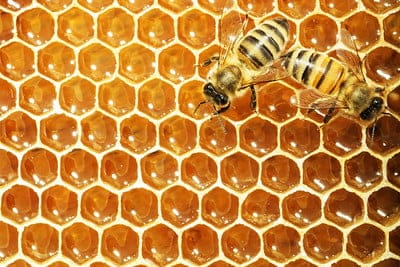
When worker bees forage across millions of blossoms, their statically charged hairs attract floral pollen along with microscopic airborne soil dust. If botulinum spores are present in the dust, they end up inside the hive and become encapsulated within the honey comb. Studies indicate that between 2% and 10% of commercial honey jars worldwide contain detectable dormant C. botulinum spores.
The Two Different Diseases: Foodborne vs. Infant Botulism
Many adults confuse adult botulism with infant botulism. They are entirely different medical mechanisms:
- Adult Foodborne Botulism (Intoxication): Adults get botulism by eating food (such as improperly home-canned vegetables or unmonitored home ferments (see our definitive guide to fermented garlic honey and botulism pH safety testing)) where bacteria *already grew* and pre-formed the toxin inside the jar. If an adult eats raw honey containing dormant spores, the spores simply pass through the adult digestive tract and are eliminated harmlessly without germinating.
- Infant Botulism (Intestinal Toxico-Infection): In an infant under 12 months, the baby does not eat pre-formed toxin. The baby ingests dormant endospores. Because an infant’s digestive system is still developing, the spores find an ideal low-oxygen, warm, alkaline environment where they wake up, multiply, and manufacture the neurotoxin directly inside the baby’s bowel.
“A dormant spore is like an armored plant seed. In an adult, the stomach’s hydrochloric acid is a blowtorch that incinerates the seed. In an infant, the stomach is warm, damp potting soil. That biological difference is why honey is an elixir for adults but a poison for babies.”
— Barnaby Thorne, Head Apiarist at bee-honey.org
2. Does Cooking or Baking Honey Kill Botulism Spores? (The Heat Resistance Fact Check)
Direct Answer: No, standard cooking, boiling, or baking does NOT kill botulism spores. Clostridium botulinum endospores possess an armored keratin-like protein coat that withstands boiling water (212°F / 100°C) for several hours. Destroying spores requires commercial pressure retort canning at 250°F (121°C) under 15 psi for at least 3 minutes.
This is the single most dangerous misconception among parents and caregivers: “It’s okay if the baby eats honey graham crackers or honey-sweetened muffins because the oven was at 375°F!”
Here is the physical reality of baking physics:
- Oven Air Temp vs. Internal Crumb Temp: While your oven may be heated to 375°F (190°C), the internal temperature of a baking loaf of bread, muffin, or cookie rarely exceeds 205°F to 210°F (96°C–99°C) due to evaporative cooling of moisture.
- Spore Thermal Survival: C. botulinum endospores have a decimal reduction time ($D_{121}$ value) of 0.2 minutes at 121°C under pressure. At atmospheric boiling (100°C / 212°F), it takes between 3 to 5 hours of continuous boiling to achieve spore death.
- Pasteurization Is Useless: Commercial honey pasteurization heats honey to roughly 160°F (71°C) for a few seconds simply to kill yeast and melt sugar crystals. It has zero effect on botulism endospores.
The Definitive Rule for Prepared Foods:
If a baked product, baby puree, cereal, or glaze lists “honey” anywhere on the ingredient label, it is strictly forbidden for children under 12 months of age. This includes honey nut cheerios, honey wheat bread, honey-mustard glazes, and homemade baby teething biscuits.
3. What Happens If a Baby Accidentally Eats Honey? (The Clinical Observation Window (What Pediatricians Monitor))
Direct Answer: If an infant swallows honey, do not induce vomiting. The incubation period for infant botulism is between 3 and 30 days (typically 10 to 14 days). Monitor the infant closely for early warning signs: severe new-onset constipation (lasting >3 days), a weak or altered cry, poor suckling, loss of head control (“floppy baby”), and drooping eyelids (ptosis). Contact your pediatrician immediately.
If your baby licked a spoon or chewed on a honey cracker, take a deep breath. Only a small fraction of honey jars contain viable spores, and exposure does not guarantee clinical disease. However, because botulism neurotoxin is the most potent biological toxin known to science, vigilance is mandatory.
The 30-Day Symptom Progression Timeline
In 95% of clinical infant botulism cases, the very first symptom is constipation (often lasting 3 or more days in an infant with previously regular bowel habits). This occurs because the botulinum toxin first paralyzes the enteric nervous system controlling intestinal peristalsis.
As the toxin enters systemic circulation, it blocks acetylcholine receptors at cranial nerves. Symptoms include:
• Weak, muffled, or raspy cry (sounds noticeably different from their normal hunger cry).
• Poor latch / weak suckling reflex (milk dribbles out of the mouth; takes twice as long to feed).
• Loss of facial expression and bilateral ptosis (drooping, sleepy-looking upper eyelids).
The classic “floppy baby syndrome.” The infant cannot hold its head up, limbs feel limp like a rag doll, and respiratory muscles weaken. Call 911 or go to an emergency room immediately.
Medical Treatment: Modern infant botulism is highly treatable when caught early using BabyBIG (Botulism Immune Globulin Intravenous – Human), an intravenous antitoxin that neutralizes circulating neurotoxin and reduces hospital stays by weeks.
4. The Infant Food Safety Matrix: Honey Risk Tiers
Direct Answer: All foods containing honey are classified into three risk tiers: Extreme Risk (Raw or Pasteurized Liquid Honey), High Risk (Home-Baked Goods, Bread, and Glazes), and Low/Moderate Risk (Ultra-Processed Extruded Cereals). However, pediatric health agencies globally advise a 100% strict prohibition across all tiers for infants under 12 months.
Below is the complete safety tier matrix for common honey-containing products:
| Product / Food Item | Processing Method | Internal Peak Temp | Spore Survival Odds | Safe for Under 12 Mo? |
|---|---|---|---|---|
| Raw Honey (Any Variety) | Unheated / Centrifugal Extraction | Ambient (~75°F / 24°C) | 100% (Viable Spores) | STRICTLY FORBIDDEN |
| Supermarket Pasteurized Honey | Flash heated to ~160°F (71°C) | 160°F (71°C) | 100% (Spore-resistant) | STRICTLY FORBIDDEN |
| Pacifier Dipped in Honey | None (Direct topical application) | Body temp (~98.6°F / 37°C) | 100% (High Dose Risk) | EXTREME DANGER |
| Honey Graham Crackers / Bread | Oven baked at 350°F (175°C) | ~205°F (96°C) internal crumb | High (Survives 205°F) | STRICTLY FORBIDDEN |
| Honey BBQ Glazes / Sauces | Simmered or grilled | 212°F (100°C) | High (Boiling does not kill) | STRICTLY FORBIDDEN |
| Honey Nut Cheerios / Cereals | Industrial extrusion + honey coating | Varied industrial heating | Low to Moderate | NOT RECOMMENDED (<12 Mo) |
| Honey for Toddlers (12+ Months) | Any format (raw, comb, or baked) | Any | Destroyed by gastric acid | 100% SAFE (> 1 Year) |
5. Why Does Honey Magically Become Safe on a Baby’s First Birthday?
Direct Answer: Honey becomes safe after 12 months because the infant digestive tract undergoes two critical biological transformations: gastric hydrochloric acid production increases to achieve an adult pH of 1.5 to 2.0, and the gut microbiome colonizes with trillions of competitive bacteria (specifically Bifidobacterium and Bacteroides) that physically prevent botulinum spores from germinating.
Parents often laugh and ask: “Does a clock strike midnight on their first birthday and suddenly the baby is immune?”
The 12-month cutoff chosen by the American Academy of Pediatrics (AAP), the World Health Organization (WHO), and the CDC is an intentionally conservative clinical safety buffer. In reality, the physiological transition happens gradually between months 6 and 12:
- Development of Gastric Acidity: Newborns and young infants produce minimal gastric acid. By 12 months, stomach parietal cells produce robust concentrations of hydrochloric acid (HCl), lowering gastric pH below 2.0—an acidic furnace that rapidly lyses dormant spores.
- The Microbial Shield (Bacterial Colonization): As solid foods are introduced around 6 months, the infant’s sterile gut transforms into a dense microbial ecosystem. By one year of age, billions of beneficial bacteria produce short-chain fatty acids (SCFAs) and bacteriocins that competitively crowd out any opportunistic C. botulinum spores that enter with food.
Once your child celebrates their first birthday, you can safely introduce delicious, nutritious raw honey into their diet—starting with small amounts drizzled over oatmeal or fruit (including clinically validated remedies like buckwheat honey for nighttime pediatric coughs).
Frequently Asked Questions About Babies, Honey & Botulism
Can a breastfeeding mother eat honey?
Yes, absolutely. It is 100% safe for a nursing mother to eat raw or cooked honey. Botulinum endospores cannot pass through the mother’s bloodstream into breast milk. Even in the virtually impossible event that a mother contracted botulism, the large molecular size of the botulinum neurotoxin (~150 kDa) prevents it from crossing into mammary tissue. (Just ensure honey does not get directly onto your nipples or baby’s hands).
Can pregnant women eat honey?
Yes. An adult woman’s mature gastrointestinal tract destroys botulinum spores before they can germinate. The placenta also acts as a biological barrier against botulism spores and toxins. Honey poses zero infant botulism risk during pregnancy.
My 10-month-old accidentally ate a bite of a honey graham cracker. What should I do?
Do not panic and do not induce vomiting. The risk of botulism from a small crumb of commercial graham cracker is extremely low, but not zero. Simply monitor the infant closely over the next 3 to 30 days for the primary early warning sign: severe, unexplained constipation, followed by weak suckling or unusual lethargy. Contact your pediatrician for guidance.
Is Manuka honey safe for babies under one year?
No. Manuka honey—despite its high methylglyoxal (MGO) content and potent antibacterial properties—is completely ineffective against bacterial endospores. C. botulinum endospores are impervious to MGO and hydrogen peroxide. Manuka honey carries the exact same infant botulism risk as regular honey.
Do botulism spores cause honey to spoil or go bad in the jar?
No. Honey has a natural water activity below 0.60, which prevents spores from germinating or reproducing in the jar. Spores remain in suspended animation indefinitely without altering the taste, texture, or safety for adults (read our complete scientific breakdown on why honey never expires and storage science).
What is the survival rate for infant botulism?
With modern pediatric intensive care and prompt administration of BabyBIG (Botulism Immune Globulin), the survival rate for infant botulism is greater than 98%. Most infants recover full neuromuscular function without permanent neurological deficits.
Sources & Scientific References
- Arnon, S. S., et al. (1979). Honey and other environmental risk factors for infant botulism. The Journal of Pediatrics, 94(2), 331–336.
- Centers for Disease Control and Prevention (CDC). Infant Botulism: Clinical Overview and Prevention Guidelines. CDC Division of Foodborne, Waterborne, and Environmental Diseases.
- American Academy of Pediatrics (AAP). Why Honey is Dangerous for Infants: Infant Botulism. HealthyChildren.org.
- Aureli, P., et al. (2002). Suspected infant botulism: isolation of Clostridium botulinum from honey. Journal of Clinical Microbiology, 40(6), 2275–2276.
- Midura, T. F. (1996). Update: infant botulism. Clinical Microbiology Reviews, 9(2), 119–125.
- Koepke, R., et al. (2008). Global epidemiology of infant botulism. The Pediatric Infectious Disease Journal.
[…] fermented with garlic, never give any honey product to infants under 12 months of age. Dormant Clostridium botulinum spores endospores unaffected by water activity or mild fermentation can colonize an infant’s […]
[…] C. botulinum spores exist everywhere in the outdoor environment—in soil, garden dirt, agricultural dust, and on the skins of root vegetables like garlic, carrots, and potatoes. Bees even occasionally track dormant spores back to the hive on their furry legs, which is precisely why infants under one year old must never consume honey. […]
[…] as we highlighted in our infant botulism medical guide, young puppies under 12 months do not possess a sufficiently mature gastrointestinal microbiome or […]
[…] Risk of fatal infant botulism. Immature gut flora cannot prevent spore germination (see infant botulism guide). […]
[…] honey of any variety) to infants under 12 months of age. As detailed in our comprehensive guide to infant botulism risks, an infant’s immature gastrointestinal microbiome cannot neutralize dormant Clostridium […]
[…] The Reality: Absolute medical prohibition: Because raw propolis contains trace amounts of raw pollen and hive materials, it carries the same infant botulism and hypersensitivity risks as raw honey. Never give propolis in any form to children under 12 months old (see our infant botulism clinical guide). […]