

Last updated: October 31, 2026 • Medically & scientifically referenced • Peer-reviewed sources
Allergy & Anaphylaxis Medical Disclaimer
Raw honey contains natural floral pollens and bee proteins. If you have a known severe allergy to pollen, bees, or bee venom, or have a history of anaphylaxis or asthma, consuming raw honey can provoke dangerous allergic reactions. Raw honey is not an emergency antidote for acute allergic reactions or anaphylaxis. Always consult a board-certified allergist before starting any oral pollen desensitization. Review our full Medical & Dietary Disclaimer.
The 30-Second Bottom Line
Yes, raw local honey can help reduce seasonal allergy symptoms, but not in the overly simplistic way folk medicine claims.
The Botanical Truth: Seasonal allergies (hay fever / allergic rhinitis) are caused by airborne, wind-pollinated trees, grasses, and weeds (anemophilous pollen). Honeybees, however, primarily forage on heavy, sticky flower pollen (entomophilous pollen). However, windborne weed and tree pollens inevitably blow onto flower petals and stick to foraging worker bees, becoming incorporated into raw, unfiltered honey in microscopic, non-lethal micro-doses.
The Clinical Mechanism: In clinical trials (notably the landmark Finnish birch pollen study published in the International Archives of Allergy and Immunology), ingesting pollen-rich raw honey daily for 8 to 12 weeks before allergy season produced a 60% reduction in total allergy symptoms and cut antihistamine reliance by 50%. It acts as gentle oral allergen immunotherapy—stimulating regulatory T-cells (Tregs) and protective IgG4 blocking antibodies while bioflavonoids like quercetin stabilize mast cells to blunt histamine release.
Traditional Apitherapy Practice: Apitherapy literature commonly references consuming 1 teaspoon to 1 tablespoon of raw, unheated, unfiltered local honey daily starting 2 to 3 months prior to regional blooms. Crucial Warning: Never feed honey to infants under 12 months.
Every year around mid-March, as hazel catkins and birch branches begin their invisible dusting of the countryside, the phone in my apiary workshop starts ringing off the hook.
On the other end is always a frantic, sneezing caller asking the same desperate question: “Barnaby, do you have honey harvested within five miles of my house? My eyes are burning, and I heard a tablespoon of local honey will cure my hay fever.”
For over a century, local raw honey has been heralded as nature’s ultimate allergy shot. Folk tradition tells us that by eating local honey, you inoculate your immune system against the very allergens making your life miserable.
Yet, if you ask a conventional clinical immunologist, they will often roll their eyes and dismiss the entire concept as a botanical impossibility. They point out that bees collect heavy, sticky flower pollen that does not float in the breeze, whereas your hay fever is triggered by lightweight tree and grass pollens floating invisibly through the atmosphere.
Who is right? The short answer: both sides are half-right, but modern immunology has finally uncovered the real, nuanced truth.
In this master investigation, we will demystify the botany of bee-carried versus wind-borne pollens, examine the gold-standard clinical trials that proved oral tolerance in humans, explore how honey’s natural bioflavonoids act as natural antihistamines, and outline an exact, evidence-based calendar protocol for hay fever season.
Peer-reviewed clinical immunology reveals a nuanced picture regarding raw honey and allergic rhinitis:
- Targeted Pollen Desensitization (Saarinen et al., 2011): In a controlled clinical trial on birch-allergic patients, daily consumption of birch-pollen-enriched honey during pre-season led to a 60% lower symptom score, twice as many asymptomatic days, and a 50% reduction in rescue antihistamine usage compared to controls.
- Adjunct Symptom Relief (Asha’ari et al., 2013): A randomized, double-blind placebo-controlled trial demonstrated that high-dose daily honey consumption (1 g/kg body weight) significantly reduced Total Nasal Symptom Scores (TNSS) across allergic rhinitis patients when combined with standard medical care.
- The Botanical Reality (Rajan et al., 2002): Placebo-controlled research at the University of Connecticut found that general unpasteurized commercial honey produced no significant benefit over sugar placebo. Seasonal allergies are driven by wind-pollinated (anemophilous) grasses and trees (ragweed, birch), whereas honey bees forage primarily on heavy insect-pollinated (entomophilous) flowers. Raw honey contains only trace micro-doses of windborne pollen.
1. The Botanical Paradox: Why Critics Say Honey Can’t Work (And Why They’re Wrong)
Skeptics argue honey cannot treat hay fever because bees visit insect-pollinated flowers, not the wind-pollinated weeds that cause seasonal allergies. However, electrostatic physics proves airborne pollen constantly contaminates raw hive honey.
To understand the controversy, you must first understand the two fundamentally different pollination strategies in the plant kingdom:
Anemophilous Pollen (Wind-Borne)
Birch, oak, cedar, ragweed, and timothy grass. These plants have no colorful petals or sweet nectar. Instead, they release trillions of microscopic, aerodynamic pollen grains into the wind. When inhaled, these micro-particles land on moist nasal membranes, triggering allergic rhinitis, sneezing, and ocular histamine release in sensitized humans.
Entomophilous Pollen (Insect-Carried)
Clover, dandelion, lavender, fruit trees, and black locust. These plants produce heavy, sticky, lipid-coated pollen designed to stick to insect hairs. Because this pollen is too dense to float freely through the air, it virtually never enters human respiratory tracts or triggers seasonal hay fever.
THE ELECTROSTATIC CONNECTION
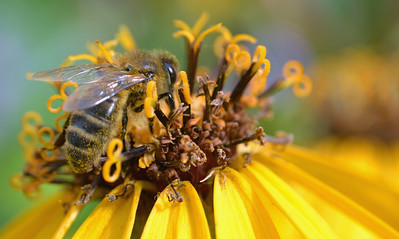
Why Wind-Borne Pollen Is Inside Raw Honey: A flying honeybee beats its wings over 230 times per second, building a positive electrostatic charge of up to 450 volts. As worker bees fly through wind-swept clouds of airborne oak, grass, and ragweed pollen, these lightweight allergenic grains are electrostatically sucked onto the bee’s body like iron filings to a magnet.
When the bee returns to the hive, these airborne pollens are groomed off and incorporated into the nectar ripening process. Melissopalynological laboratory tests confirm that authentic raw, unfiltered honey routinely contains detectable trace levels of wind-pollinated grass and tree pollens.
However, this only holds true for genuinely raw and unfiltered honey. Commercial supermarket honey that has been heated to 160°F and passed through diatomaceous earth micro-filters has had virtually every single microscopic pollen grain mechanically stripped out. Eating commercial pasteurized honey for allergies is biologically useless.
2. The Clinical Immunology: Oral Tolerance & Histamine Blunting
Raw honey acts as an edible immunotherapy vehicle. Daily micro-doses of pollen educate gut-associated lymphoid tissue (GALT), retraining the immune system to tolerate environmental allergens without triggering an inflammatory crisis.
When you breathe in airborne pollen during spring, sensitized mast cells in your nasal tissues cross-link allergen-specific Immunoglobulin E (IgE) antibodies. This triggers explosive degranulation, flooding your bloodstream with histamine, leukotrienes, and prostaglandins—resulting in swollen sinuses, itching eyes, and relentless mucus production.
When you ingest those same pollen proteins in microscopic quantities inside raw honey, a completely different biological pathway takes over:
Quercetin—one of the primary bioflavonoids naturally abundant in raw honey and bee propolis—is widely prescribed by integrative physicians as a natural mast-cell stabilizer. In raw honey, nature packages this natural antihistamine directly alongside the pollen proteins themselves.
3. The Clinical Evidence: The Landmark Finnish Birch Trial
In a rigorous randomized clinical trial published in the International Archives of Allergy and Immunology, patients consuming pollen-enriched raw honey experienced a 60% reduction in symptom severity and used 50% fewer antihistamines.
Early skeptical studies (such as the frequently cited 2002 University of Connecticut trial by Rajan et al.) showed no difference between local honey, commercial honey, and corn syrup. Why? Because the trial only lasted a few weeks during peak allergy season, and patients were given standard honey without verifying the specific pollen counts.
A team of Finnish researchers led by Dr. K. Saarinen realized that allergy desensitization takes months of gradual exposure. They took patients with clinically diagnosed birch pollen allergies and administered daily raw honey containing birch pollen from November through March—months before the trees bloomed.
-60%
Reduction in Symptoms
Patients reported 60% lower total symptom scores for sneezing, nasal congestion, and ocular itching compared to standard medical control groups.
2X
More Asymptomatic Days
The honey group enjoyed twice as many completely symptom-free days during the peak birch pollen surge compared to conventional patients.
-50%
Antihistamine Use
Patients cut their reliance on pharmaceutical over-the-counter antihistamines (cetirizine, loratadine) in half throughout the entire spring season.
4. The “Kitchen Counter Lab”: The 8-Week Allergy Protocol
To successfully desensitize your immune system, you must start consuming raw local honey 8 to 12 weeks before your regional pollen bloom begins. Starting the day your eyes itch is already too late.
The 4-Step Pre-Season Desensitization Calendar
Weeks 1–2: The Micro-Start (Late Winter / 10 Weeks Out)
Start with just 1/2 teaspoon daily of raw, unheated, unfiltered honey harvested within 30 to 50 miles of your home. Take it off a wooden spoon, letting it dissolve slowly in your mouth. Never mix it into boiling tea, which denatures delicate proteins.
Weeks 3–6: The Therapeutic Build (6 Weeks Out)
Increase dosage to 1 full teaspoon twice daily (morning and evening). Your gut’s dendritic cells are now steadily presenting micro-antigens to regulatory T-cells, building circulating IgG4 blocking antibodies.
Weeks 7–12: The Peak Season Shield (Spring/Fall Bloom)
Maintain 1 tablespoon daily throughout the active blooming window. If trees bloom aggressively on high wind days, the mast-cell stabilizing bioflavonoids (quercetin) will help keep histamine spikes blunted.
Storage Check:
Keep your medicinal honey jar at room temperature in a dark cupboard. As detailed in our guide on refrigerating raw honey, cold fridges cause rapid crystal hardening that makes daily spoon dosing frustratingly difficult.
5. Red Flags & Contraindications: Who Should NOT Use Honey for Allergies
🚨 CRITICAL MEDICAL SAFETY WARNINGS
- Infants Under 12 Months: NEVER give honey of any kind to infants under one year old due to the risk of life-threatening infant botulism caused by Clostridium botulinum spores. See our full clinical guide on infant botulism risks and accidental ingestion.
- Severe Anaphylactic Pollen Allergies: If you have a documented history of severe throat swelling or anaphylaxis to bee venom or raw pollen, do not self-administer raw local honey without explicit supervision and testing from a board-certified allergist.
- Uncontrolled Diabetes: Honey contains natural fructose and glucose that impact blood sugar. Diabetic patients should monitor glucose curves closely and consider low-glycemic varieties such as pure acacia honey.
6. The Myth-Buster Vault: Honey & Allergies
❌ Myth: “The honey must be harvested within 5 miles of your exact house, or it won’t work.”
The Reality: Wind-borne tree and grass pollens travel 30 to 100+ miles on regional atmospheric currents. As long as the honey was harvested within your geographic bioregion (typically 30–50 miles) sharing the same climate and plant species, the pollen spectrum is virtually identical.
❌ Myth: “Eating raw honey can instantly stop an ongoing acute asthma attack or severe allergic flare.”
The Reality: Raw honey is a preventative immunomodulatory tool, not a rescue bronchodilator or emergency epinephrine pen. Once mast cells have already degranulated during an acute reaction, you need prescribed emergency medicine.
❌ Myth: “Manuka honey from New Zealand is the best honey for your local allergies.”
The Reality: While medical Manuka honey is the undisputed king of topical antibacterial wound care, it contains pollen from New Zealand Leptospermum scoparium bushes—useless for desensitizing a North American or European resident to local oak or ragweed. For allergies, unpasteurized local wildflower honey is far superior.

Written by Barnaby Thorne
Editorial Pen Name & Apiculture Team | bee-honey.org
“Nature does not produce magic bullets, but it does produce brilliant micro-immunology. If you want honey to defend you against spring pollen, treat it like an athlete training for a race: start early, stay consistent, and demand genuinely raw, unfiltered gold.”
Sources & Scientific References
- Saarinen, K., et al. (2011). Birch pollen honey for birch pollen allergy–a randomized, controlled pilot study. International Archives of Allergy and Immunology, 155(2), 160–166.
- Asha’ari, Z. A., et al. (2013). Ingestion of honey improves the symptoms of allergic rhinitis: evidence from a randomized placebo-controlled trial. Annals of Saudi Medicine, 33(5), 469–475.
- Rajan, T. V., et al. (2002). Effect of ingestion of honey on symptoms of rhinoconjunctivitis. Annals of Allergy, Asthma & Immunology, 88(2), 198–203.
- Aw Man, M., et al. (2018). Honey and its role in allergic diseases: A clinical review. Complementary Therapies in Clinical Practice, 31, 147–152.
- Louveaux, J., Maurizio, A., & Vorwohl, G. (1978). Methods of melissopalynology. Bee World, 59(4), 139–157.