

Last updated: October 31, 2026 • Medically & scientifically referenced • Peer-reviewed sources
Food Safety & Fermentation Acidity Notice
Home fermentation involves microbiological management. To prevent bacterial risks including Clostridium botulinum, all fermented garlic honey preparations must maintain a verified acidity below pH 4.6 using a calibrated digital meter. This educational guide does not guarantee food safety in home preparations. Always inspect ferments for off-odors and never serve honey ferments to infants under 12 months. Review our full Medical & Food Safety Disclaimer.
The 30-Second Bottom Line
What Food Safety Science Shows: The Microbiology of pH & Botulism Inhibition
Established food microbiology guidelines from the FDA (21 CFR Part 114) and university agricultural extensions explain the biochemistry of garlic-honey fermentation:
- The Critical pH 4.6 Threshold: Clostridium botulinum spores cannot germinate or produce botulinum neurotoxin in an environment with a pH of 4.60 or lower. Because authentic raw honey has a natural acidic pH typically between 3.4 and 4.5 (driven by gluconic acid), it provides an inherent chemical barrier against spore germination.
- Moisture Dilution & Fermentation: Fresh garlic contains ~65% water and a near-neutral pH (5.8–6.3). Submerging garlic in honey causes osmosis to draw moisture into the syrup, lowering viscosity and enabling beneficial wild yeasts and lactic acid bacteria (LAB) to ferment simple sugars into organic acids, lowering the pH even further over 2–4 weeks.
- The Safe Preservation Protocol: If using a high ratio of garlic to honey, measuring the batch with calibrated pH test strips or adding a splash of raw apple cider vinegar (pH ~2.8) guarantees the mixture stays permanently below the 4.6 danger threshold from day one.
Yes, fermented garlic honey is one of the world’s most potent natural immune restoratives—and when prepared correctly, the risk of botulism is virtually zero.
Clostridium botulinum spores cannot germinate, multiply, or produce neurotoxins in any environment with a pH below 4.6. Raw honey naturally sits at a highly protective pH between 3.4 and 4.5. However, because fresh garlic cloves release cellular water into the honey, you must monitor your jar: if your mixture tests above pH 4.6 on Day 3 or Day 14, immediately stir in 1 to 2 tablespoons of raw organic apple cider vinegar to lock in safety.
Mandatory Golden Rule: Never feed fermented garlic honey (or any honey product) to infants under 12 months due to infant botulism risk.
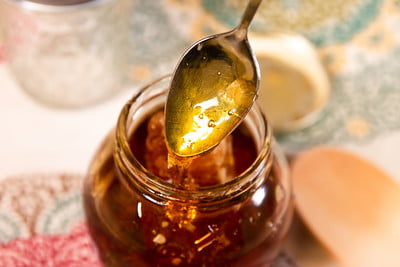
If you spend even ten minutes in traditional herbalist circles or scroll through homesteading corners of the internet, you will inevitably stumble upon glass mason jars filled with whole garlic cloves bubbling lazily in dark, runny amber honey. People swear by it like an ancient panacea. They swallow a clove at the first sign of a ticklish throat, drizzle the pungent syrup over roasted root vegetables, and proclaim it the ultimate cold-and-flu shield.
Then comes the inevitable comment section firestorm: “Stop! Raw garlic in an anaerobic jar will give you fatal botulism!”
From the perspective of hive microbiology and traditional food fermentation, this debate is fascinating. Both camps are partially right, yet both frequently misunderstand the actual biophysics occurring inside that jar.
Fermented garlic honey is not a modern TikTok hack; it is a brilliant cross-kingdom biochemical collaboration between plant defense compounds (allicin) and hive biotechnology (enzymatic oligosaccharides and organic gluconic acids). But because raw garlic is a subterranean root vegetable naturally coated in soil microbes, understanding the exact pH threshold is the difference between an artisanal immune powerhouse and an unsafe kitchen experiment.
In this definitive guide, we will strip away the fear-mongering and the careless internet folklore. You will learn the exact microbiological mechanics of C. botulinum, the synbiotic transformation of garlic and honey, our battle-tested Sterile Kitchen Protocol, how to test and adjust pH with certainty, and why blue-turning garlic is actually a badge of honor.
1. The Microbiology: How Botulism Works (And Why pH Is King)
To eliminate anxiety, you must understand the enemy. Botulism is caused by Clostridium botulinum, an obligate anaerobic, rod-shaped bacterium capable of producing one of the most potent neurotoxins known to science (botulinum toxin).
C. botulinum spores exist everywhere in the outdoor environment—in soil, garden dirt, agricultural dust, and on the skins of root vegetables like garlic, carrots, and potatoes. Bees even occasionally track dormant spores back to the hive on their furry legs, which is precisely why infants under one year old must never consume honey.
The Critical Distinction: Spores vs. Vegetative Bacteria
The dormant spores themselves do not produce toxin. You ingest them routinely on unpeeled garden produce without consequence, because a healthy adult digestive tract flushes them harmlessly. Toxin production only occurs when four specific environmental conditions are met simultaneously:
- Zero Oxygen: An anaerobic sealed container.
- Warm Temperature: Between 50°F and 122°F (10°C–50°C).
- High Moisture (Water Activity): Water activity ($a_w$) above 0.93.
- Low Acidity (Neutral pH): A pH level strictly above 4.6.
Eliminate even one of these four conditions, and Clostridium botulinum is rendered completely impotent. It cannot germinate, it cannot multiply, and it cannot synthesize a single microgram of neurotoxin.
The Honey Defense: Nature’s Multi-Barrier Fortress
Under normal circumstances, raw honey is an impossible wasteland for bacteria. As we analyzed in our storage science investigation, pure honey has a moisture content below 18% (water activity $a_w \approx 0.55–0.60$), generating an immense osmotic pressure that dehydrates microbial cells within seconds. Furthermore, raw honey is inherently acidic, possessing a natural pH between 3.4 and 4.5 thanks to gluconic acid produced by bee-derived glucose oxidase enzymes.
So why does fermented garlic honey introduce a variable?
Because garlic cloves are living plant tissues composed of roughly 65% water. When submerged in pure honey, the steep osmotic gradient draws that moisture out of the garlic cloves into the surrounding syrup. This elevates the local water activity enough for wild osmophilic yeasts and lactic acid bacteria to wake up and initiate beneficial fermentation—but it can also theoretically dilute the honey’s natural acidity if the garlic-to-honey ratio is skewed.
🧪 The Universal Safe Zone: The pH 4.6 Iron Law
Food safety regulatory bodies across the world (including the FDA, USDA, and European EFSA) establish pH 4.60 as the absolute scientific cutoff between high-acid and low-acid shelf-stable foods. Below pH 4.6, Clostridium botulinum spores are permanently locked in suspended dormancy. Most properly prepared garlic-honey batches naturally register between pH 3.8 and 4.3.
2. The Novel Vector: The Allicin-Oligosaccharide Synbiotic Multiplier
Beyond safety, why are herbalists and biochemists so enthusiastic about this specific concoction? What happens when garlic marinates in honey for a month?
This is not mere flavoring; it is a cross-domain synbiotic synthesis:
Allicin Stabilization
When garlic is crushed, alliinase converts alliin into volatile allicin. In open air, allicin decays in hours. Submerged in raw honey’s dense carbohydrate matrix, allicin and diallyl sulfides are sequestered and stabilized, preserving their broad-spectrum antimicrobial punch.
Prebiotic Synbiosis
Garlic is packed with inulin fructans; raw honey provides unique prebiotic oligosaccharides (panose, kojibiose). Lactic acid strains ferment these fibers into Short-Chain Fatty Acids (SCFAs), notably butyrate, which seals intestinal mucosal junctions and boosts systemic immunity.
Biofilm Penetration
Pathogenic upper-respiratory bacteria construct protective slimy fortresses called biofilms. Honey’s natural enzymatic hydrogen peroxide and osmotic tension weaken biofilm walls, allowing garlic’s sulfur compounds to penetrate and neutralize bacterial colonies directly.
3. The Kitchen Counter Lab: Step-by-Step Sterile Fermentation Protocol
Follow this verified protocol to ensure 100% microbiological safety, active probiotic bubbling, and maximum bio-availability.
🥄 Required Ingredients
- 1 cup raw, unpasteurized honey (Never use generic pasteurized syrup; look for raw local or unheated wildflower honey).
- 1 to 1.5 heads organic fresh garlic (Roughly 12–18 plump cloves, skins removed).
- 1–2 tbsp raw apple cider vinegar (With “the mother”; keep on standby for pH calibration).
🔬 Essential Equipment
- 1 pint (16 oz) glass mason jar with a clean two-piece lid.
- Digital food-grade pH test strips (Precision range 3.0–6.0) or a calibrated digital pH pen.
- Clean chef’s knife and wooden cutting board.
Step 1: Sanitize and Prep the Cloves
Wash your mason jar and lid in hot soapy water and let them air-dry completely. Moisture from tap water can introduce unwanted mold spores. Peel the garlic cloves gently. Using the flat side of your chef’s knife, press down lightly on each clove until you hear a faint “crunch”.
Apiarist’s Tip: Do not mince or puree the garlic! You only want to bruise the outer cellular membrane. This cracks open cell walls to trigger the alliinase-to-allicin reaction while allowing honey to slowly seep into the clove without turning your jar into cloudy mush.
Step 2: Submerge Under Liquid Gold
Place the bruised cloves into your clean glass jar. Pour your authentic raw honey over the garlic until every clove is completely submerged, leaving roughly 1.5 to 2 inches of headspace at the top of the jar. This headspace is crucial: active fermentation produces carbon dioxide ($CO_2$), and the mixture will froth and expand during the first two weeks.
Step 3: The Daily Burp and Inversion Cycle (Days 1 to 14)
Because garlic cloves contain air and water, they will stubbornly float to the top of the jar. Any clove left exposed to air above the honey line can develop surface mold.
- The Daily Inversion: Tightly fasten the lid once daily and turn the jar upside down for 30 seconds to coat all cloves in antiseptic honey, then set it right-side up in a dark pantry at room temperature (68°F–75°F / 20°C–24°C).
- The Daily Burp: Once a day, gently unscrew the metal band just enough to release the hiss of trapped $CO_2$ gas, then reseal.
Step 4: The Mandatory pH Verification Milestone
On Day 3 and again on Day 14, open your jar and dip a precision pH strip into the liquid:
- If the pH is 4.5 or lower (Typical: 3.8–4.3): Your batch is in the safe microbiological zone. Continue fermenting.
- If the pH is 4.6 or higher: Immediately stir in 1 tablespoon of raw organic apple cider vinegar (which naturally has a pH of ~2.5–3.0). Reseal, invert, and retest after 24 hours. The added acetic acid guarantees safety instantly.
4. The 28-Day Fermentation Curve: What to Expect
A lot of beginners panic during the first week because the mixture changes radically. Here is your week-by-week visual roadmap:
5. The Myth-Buster Vault: What the Internet Gets Dead Wrong
Myth 1: “My garlic turned bright blue-green—it’s toxic mold!”
The Reality: Do not throw away your jar! In an acidic environment, garlic enzymes break down sulfur-containing isoalliin compounds. These combine with natural amino acids to form pyrrole rings, which chain together into natural green, teal, or sapphire-blue pigments (similar to chlorophyll or anthocyanins). It is completely non-toxic, safe, and actually proves that your environment is properly acidic! The blue hue fades into rich caramel brown over several weeks.
Myth 2: “Store-bought regular honey works just as well.”
The Reality: Ultra-filtered commercial supermarket honey has been flash-heated to 160°F (71°C) and micro-filtered. This kills the native wild lactobacilli, destroys the glucose oxidase enzymes, and strips the microscopic pollen grains that drive authentic fermentation. Using dead supermarket syrup often results in a moldy mess rather than a healthy ferment. Always insist on raw, unfiltered honey.
Myth 3: “It’s safe to give to sick toddlers under 12 months.”
The Reality: Absolute non-negotiable warning: Never administer honey of any kind—raw, fermented, or baked—to an infant under 12 months of age. An infant’s intestinal tract lacks the mature bacterial microbiome and gastric acid output necessary to suppress dormant C. botulinum spores. For children aged 2 and older, it is a fantastic natural cough remedy.
Myth 4: “You must store it in the refrigerator.”
The Reality: Putting your jar in the fridge immediately halts beneficial fermentation. Lactic acid bacteria go dormant, and cold temperatures trigger rapid glucose crystallization, turning your jar rock-hard. Keep it at room temperature in a dark pantry. Once the ferment is fully aged (after 30 to 60 days), you can refrigerate it if you wish, but it remains shelf-stable at room temperature for years.
6. How to Use It: Clinical Dosing & Culinary Applications
Once your garlic honey has fermented for at least 3 weeks, it becomes one of the most versatile elixirs in your household:
🌿 Acute Cold & Flu Protocol
- First Scratchy Throat: Eat one whole fermented clove directly from the jar. It will taste sweet, mellow, and mildly warm—not fiery like raw garlic.
- Throat Soothing: Home preservers often take 1 teaspoon of the infused liquid honey to coat and soothe dry throat sensations.
- Winter Morning Tonic: Stir 1 tablespoon of infused honey into warm (not boiling!) water with fresh lemon juice.
🍳 Culinary Superpower
- Artisanal Pizza Glaze: Drizzle the runny garlic honey over sourdough pizza crusts, salty prosciutto, or goat cheese.
- Sheet Pan Roasting: Toss carrots, Brussels sprouts, or parsnips with olive oil and 2 tablespoons of garlic honey before roasting.
- Savory Salad Emulsion: Whisk 1 tbsp garlic honey with extra virgin olive oil, Dijon mustard, and apple cider vinegar for a probiotic vinaigrette.

From the Apiary of Barnaby Thorne
Editorial Pen Name & Apiculture Team at bee-honey.org
“When you preserve garlic in honey, you aren’t just making a remedy—you’re creating an alliance between the subterranean wisdom of the earth and the aerial mastery of thirty thousand worker bees. Respect the pH, keep your cloves submerged, and let the microorganisms do the heavy lifting.”
Sources & Scientific References
- U.S. Food and Drug Administration (FDA). Acidified Foods: 21 CFR Part 114. Code of Federal Regulations, U.S. Government Publishing Office.
- Centers for Disease Control and Prevention (CDC). Botulism: Prevention & Clinical Overview. CDC National Center for Emerging and Zoonotic Infectious Diseases.
- Block, Eric (2010). Garlic and Other Alliums: The Lore and the Science. Royal Society of Chemistry, Cambridge.
- Cavallito, C. J., & Bailey, J. H. (1944). Allicin, the antibacterial principle of Allium sativum. Journal of the American Chemical Society, 66(11), 1950–1951.
- Bogdanov, S., et al. (2008). Honey for nutrition and health: a review. Journal of the American College of Nutrition, 27(6), 677–689.
- Peck, M. W. (2006). Clostridium botulinum and the safety of minimally heated, chilled foods: an emerging issue? Journal of Applied Microbiology, 101(3), 556–570.
[…] is one of humanity’s most cherished culinary traditions (such as our scientific protocol for fermented garlic honey and botulism safety testing), while spontaneous hive fermentation produced humanity’s earliest alcohol: wild mead. If a […]
[…] as improperly home-canned vegetables or unmonitored home ferments (see our definitive guide to fermented garlic honey and botulism pH safety testing)) where bacteria *already grew* and pre-formed the toxin inside the jar. If an adult eats raw honey […]
[…] with Winter Remedies: Combine with our fermented garlic honey protocol for the ultimate two-tiered winter respiratory […]